Case Study: What Rotten Roof Decking Really Looks Like (And How We Fix It)
This roof wasn’t “just old.”
The Problem
This roof wasn’t “just old.”
It had:
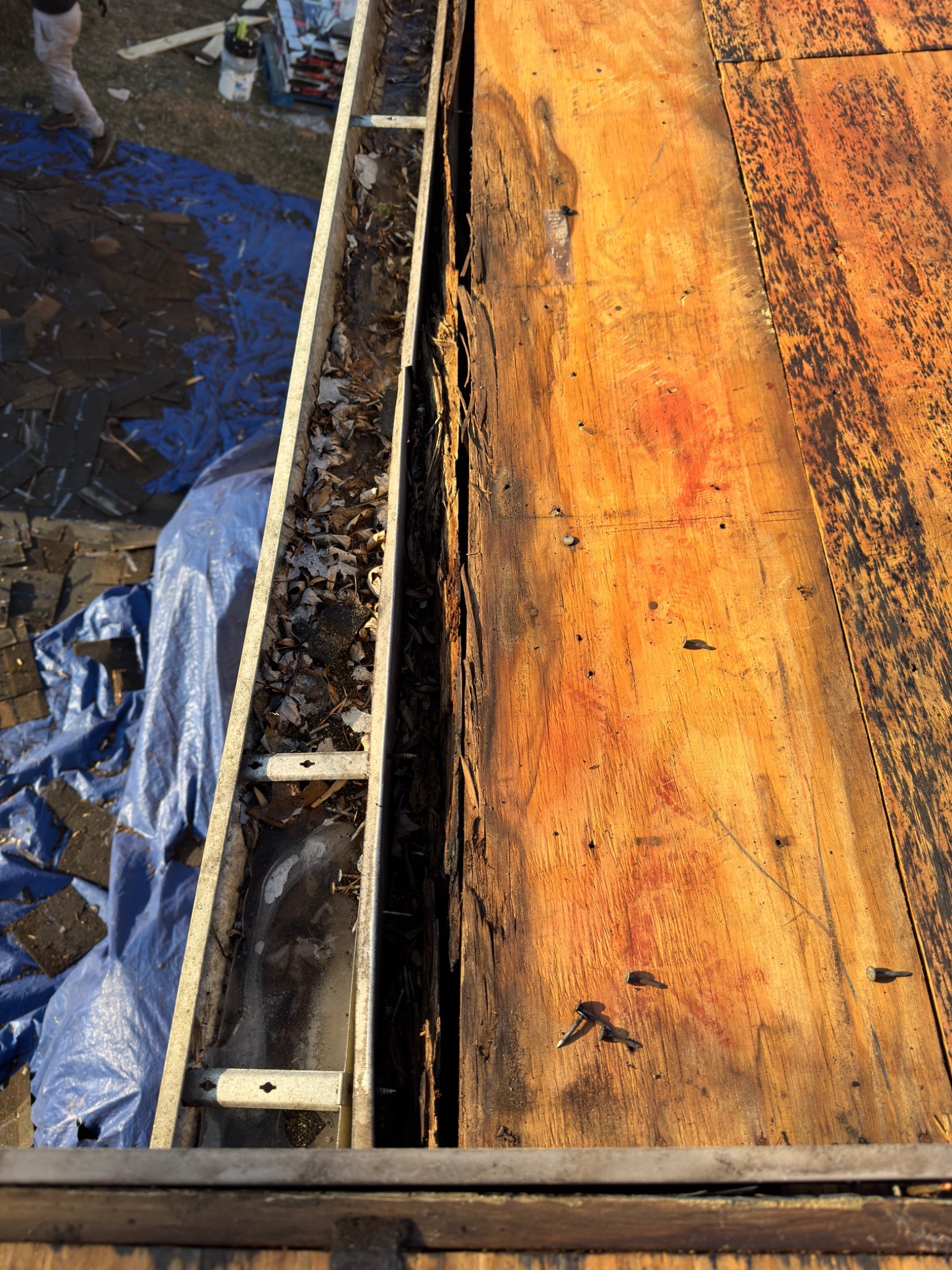
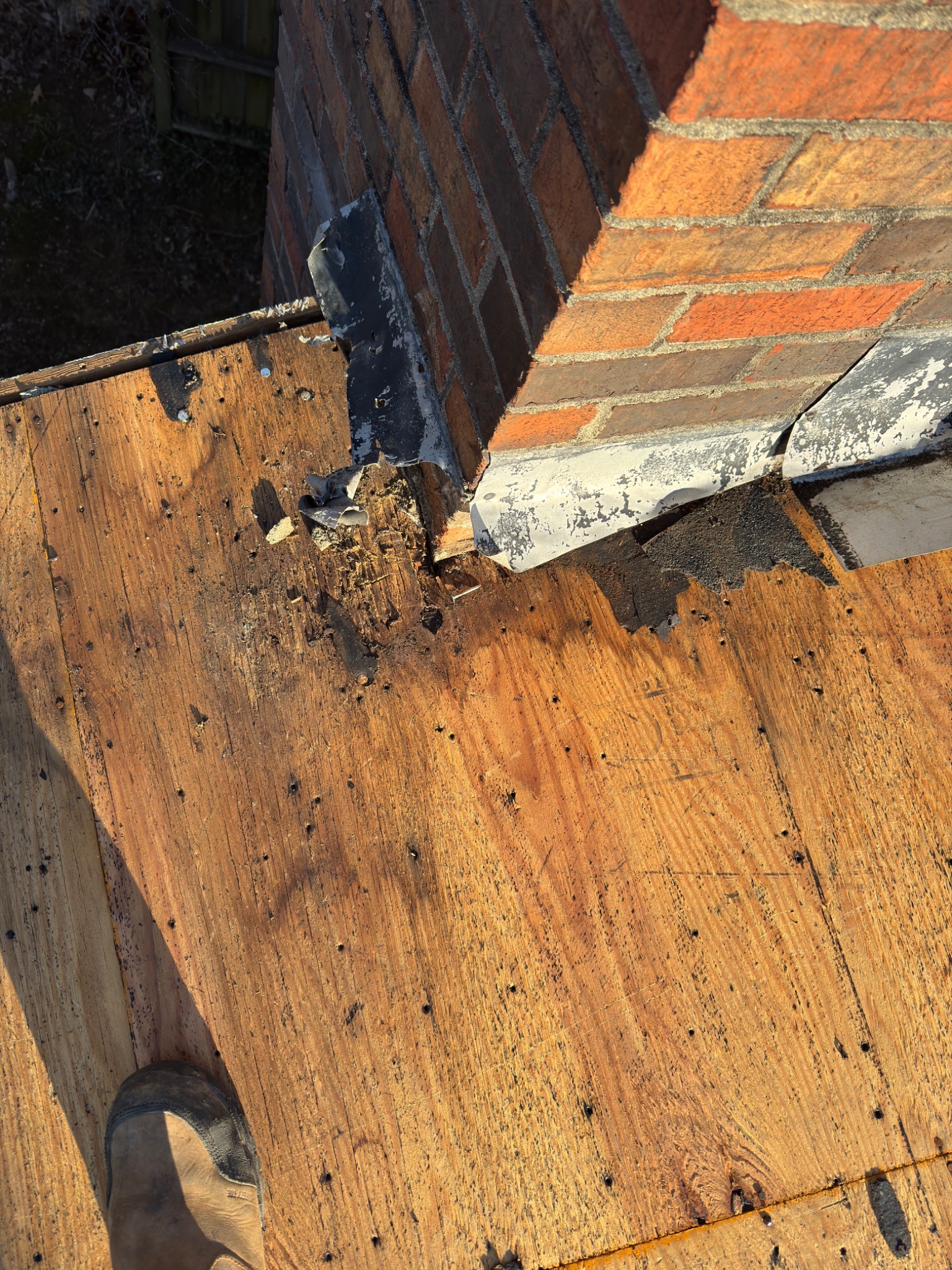
Rotten decking at the chimney
Failed flashing
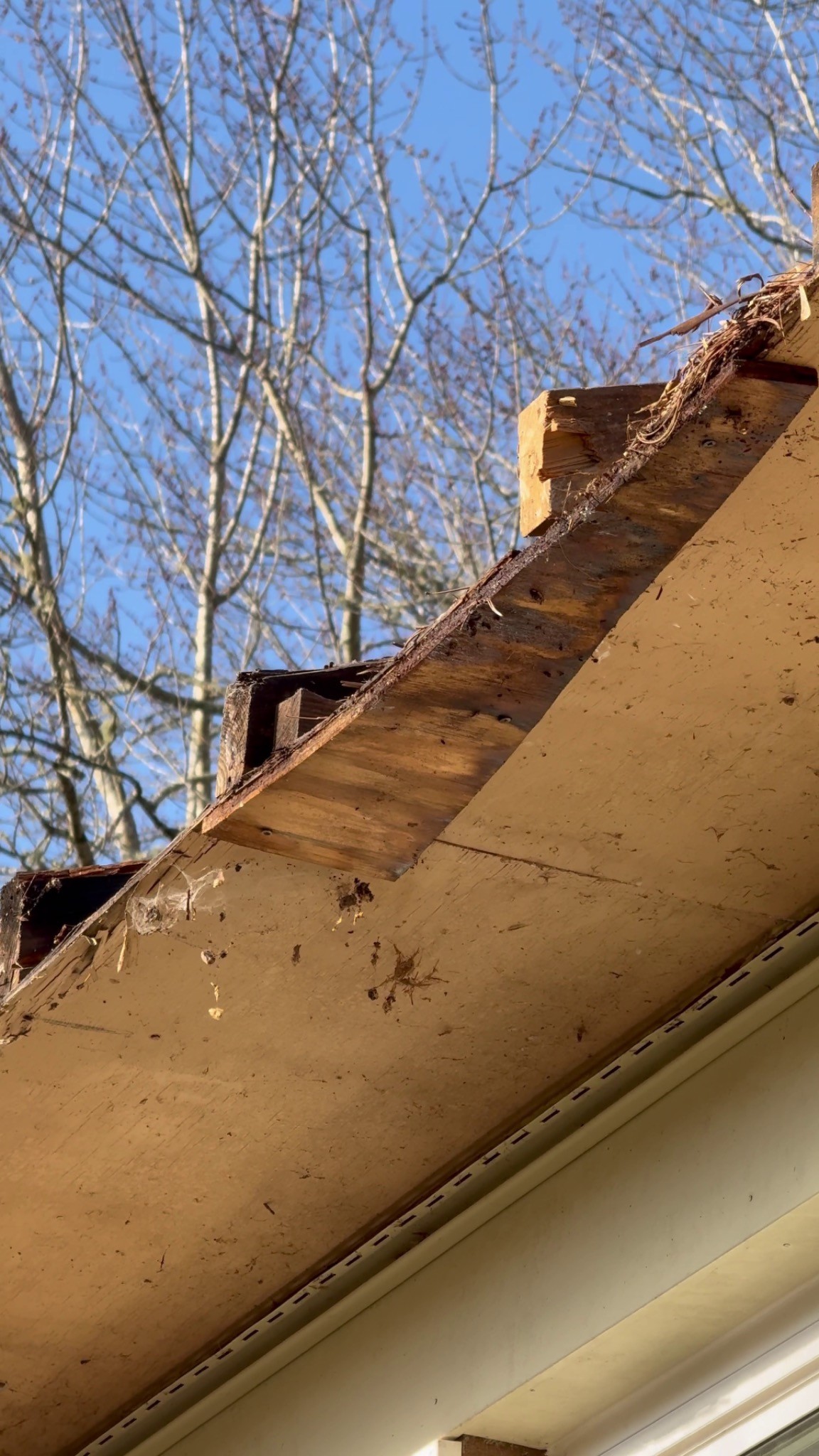
Long-term moisture at the eaves
Soft sheathing along the gutter line
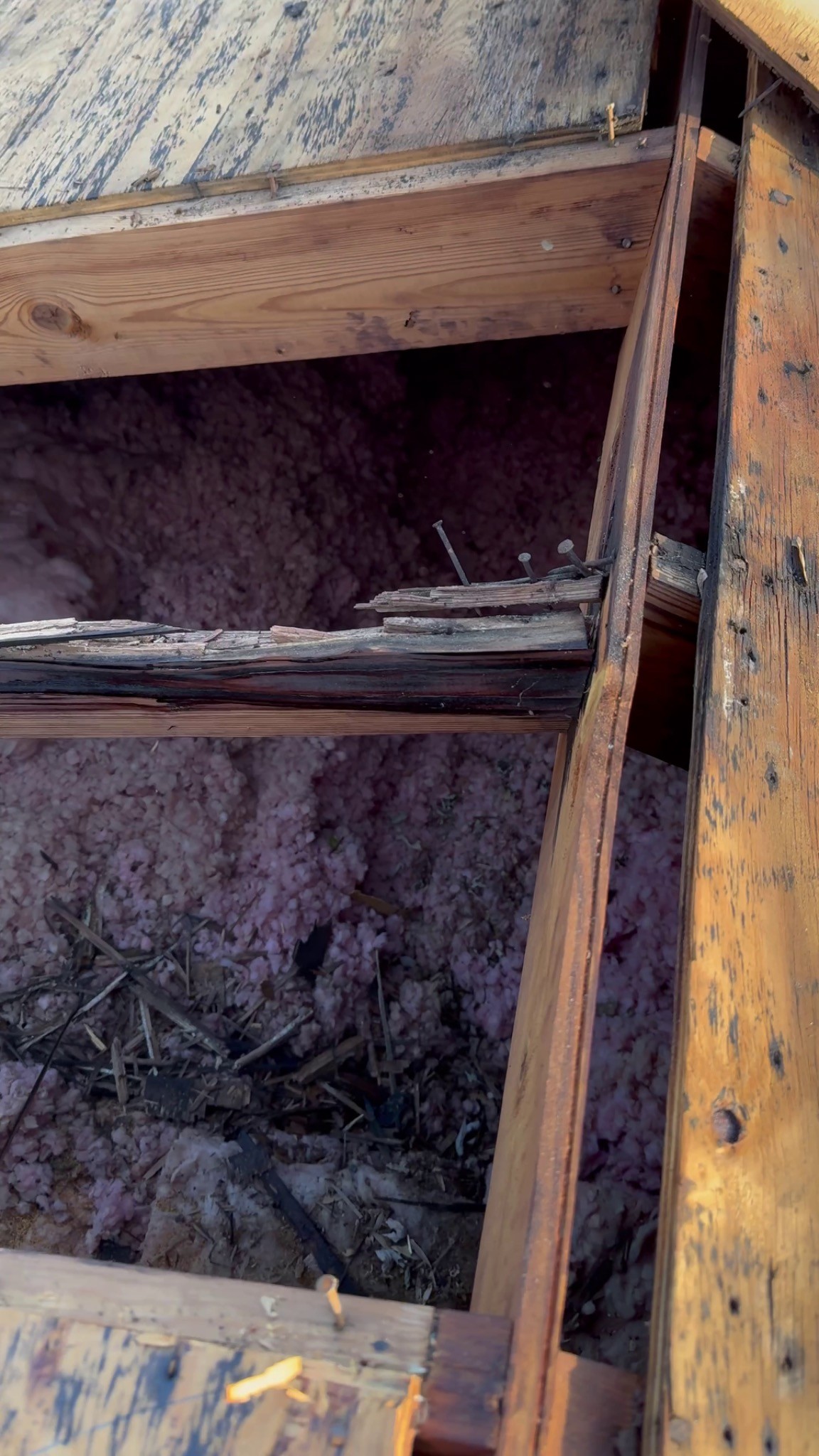
Wet insulation below
From the ground, it looked like a normal replacement.
Once we tore it off, the real story showed up.
This is common. Roof leaks rarely stay in one spot.
What Caused It
Improper chimney flashing – No true step flashing system, just surface metal.
Water backing up at gutters – Rot along the drip edge and fascia line.
Aging underlayment – No secondary protection once shingles failed.
Slow leaks over time – Not a storm issue. A maintenance issue.
Rot is almost always slow and quiet.
Our Fix
We don’t cover rot. We remove it.
Step 1 – Full tear-off
All shingles, felt, and compromised decking removed.
Step 2 – Structural inspection
Checked rafters, tails, and nailers for integrity.
Step 3 – Replace damaged decking
New sheathing installed with correct fastening schedule.
Step 4 – Proper flashing system
True step flashing at chimney
Counter flashing integrated into masonry
Ice & water membrane at penetrations and valleys
Step 5 – Synthetic underlayment + full system install
No shortcuts.
Why This Matters
If you shingle over soft decking:
Nails won’t hold properly
Shingles will lift in wind
Leaks return
Warranty can be voided
A roof is only as good as what it’s attached to.
The Result
Solid, dry substrate
Correct water management
Proper load support
Roof system built to last
This wasn’t just a re-roof.
It was a structural correction.
That’s the difference between replacing shingles — and building it right.